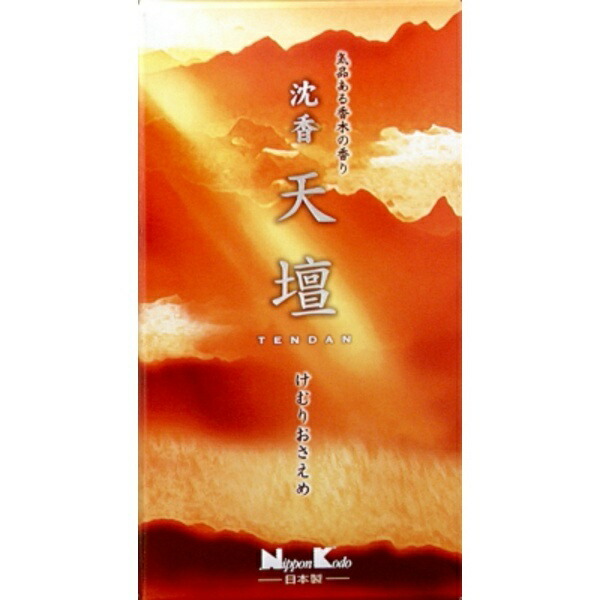
Nippon Kodo Agarwood Incense Sticks, Loose Pack, 85mm × 34mm × 156mm
JAN
4902125263932
ASIN
B002NSSZ68
Maker
Model No.
71206-001
Color
Size
Description
Nippon Kodo - Agarwood Heaven - Bulk Pack Product Description
Elegant fragrance of fragrant wood
Burning time: Approximately 25 minutes (when standing)
Incense is a way to embody compassionate thoughts and prayers, conveying feelings and heartfelt gratitude. Giving incense is not simply a gift; it is a tangible expression of the giver's heartfelt feelings. Providing incense as a memorial at funerals and memorial services is a heartfelt custom passed down throughout Japan's long history.
As the name suggests, 'Okoden' (condolence money) originally meant providing incense (koshi) rather than cash. Nippon Kodo's gift-giving incense is available in a variety of pre-packaged forms.
Light the tip of the incense stick, extinguish the flame, and let it smolder.
Burn in a non-flammable container such as an incense burner.
The Meaning of Offering Incense
Offering incense is said to be a way of communicating with Buddha through the smoke. While it may have the significance of purifying oneself and serving as a meal for the Buddha, its greatest significance lies in calming the mind with a pleasant fragrance and allowing one to face the Buddha. Incense offerings at Buddhist altars are said to be performed three times, signifying devotion to the Buddha, the Dharma, and the Sangha (Buddha: Shakyamuni Buddha; Dharma: the scriptures that expound the teachings of Buddha; Sangha: the monks who spread the teachings of Buddha). While this varies by sect, it is common to burn incense in three sticks, following the example of the Buddha, the Dharma, and the Sangha. Culture and Technology, Their Inheritance and Creation
Humans, armed with fire and tools, gave birth to civilization, and the history of fragrance began at that time. A fragrance rose by chance from a flame that had been burning continuously to sustain a precious fire. People sensed its mystical power and entrusted it with prayers and wishes as something beyond human comprehension. Incense is now burned at places of worship around the world. Incense is also found in places where people seek excitement and peace. Incense is a modern, supreme spiritual culture, enriching our lives. It dates back 4,000 years, dating back to ancient India. Having developed independently in the East and the West, the culture of incense has reunited in Japan, blending and incorporating new ideas, and continues to grow. Now, the world is uniting, centered on the incense culture perfected in Japan, with fragrance as a common language. The History of Japanese Fragrance: Japan's fragrance culture has been nurtured for over a thousand years. Its history began with the introduction of Buddhism in the 6th century. By burning fragrant woods and fragrant Asian and Chinese herbs, people entrusted their prayers and wishes to the fragrant aroma. While these religious rituals spread, the practice of burning incense became part of the elegant lifestyles of the nobility. During the Muromachi period, the incense game of guessing the scent of burnt incense wood developed into an art, giving birth to the art of "kodo." During the Edo period, incense-making techniques further developed and were incorporated into the lives of ordinary people. Incense, as used today, is a part of this long history of fragrance. Research and Development: At Nippon Kodo's Research and Development Department, many researchers, including perfumery and pharmaceutical experts, apply accumulated data to create and develop fragrance products that further enrich people's lives. Fragrances are created by blending a wide variety of fragrance ingredients. These include precious natural fragrant woods and plants, their powdered incense ingredients, fragrances extracted from natural flowers and plants, and fragrances formulated around a specific theme. The ingredients and characteristics of these ingredients vary greatly depending on the source and manufacturer, significantly affecting the quality of the fragrance. Nippon Kodo analyzes a wide variety of ingredients from around the world and carefully considers their quality, safety, and supply stability to ensure the highest quality. We are also working to develop new procurement networks and establish a large-scale raw material warehouse to store large quantities of natural fragrance ingredients, particularly those that are becoming increasingly difficult to obtain. We are strategically implementing measures to maintain the quality of our fragrances and stable prices into the future. Brand: Nippon Kodo; Product Dimensions (W x D x H): 85mm x 34mm x 156mm; Net Weight: 125g; Country of Origin: Japan; Relief/Effect: Relaxation; Characteristics: Natural; Fragrance: Woody; Materials: Tabu Powder, Fragrance; Product Number | 4902125263932; 4902125263932; Nippon Kodo Agarwood Heavenly Altar Basket, Bulk Pack, 85mm x 34mm x 156mm (text created at , 2025-05-12)
Elegant fragrance of fragrant wood
Burning time: Approximately 25 minutes (when standing)
Incense is a way to embody compassionate thoughts and prayers, conveying feelings and heartfelt gratitude. Giving incense is not simply a gift; it is a tangible expression of the giver's heartfelt feelings. Providing incense as a memorial at funerals and memorial services is a heartfelt custom passed down throughout Japan's long history.
As the name suggests, 'Okoden' (condolence money) originally meant providing incense (koshi) rather than cash. Nippon Kodo's gift-giving incense is available in a variety of pre-packaged forms.
Light the tip of the incense stick, extinguish the flame, and let it smolder.
Burn in a non-flammable container such as an incense burner.
The Meaning of Offering Incense
Offering incense is said to be a way of communicating with Buddha through the smoke. While it may have the significance of purifying oneself and serving as a meal for the Buddha, its greatest significance lies in calming the mind with a pleasant fragrance and allowing one to face the Buddha. Incense offerings at Buddhist altars are said to be performed three times, signifying devotion to the Buddha, the Dharma, and the Sangha (Buddha: Shakyamuni Buddha; Dharma: the scriptures that expound the teachings of Buddha; Sangha: the monks who spread the teachings of Buddha). While this varies by sect, it is common to burn incense in three sticks, following the example of the Buddha, the Dharma, and the Sangha. Culture and Technology, Their Inheritance and Creation
Humans, armed with fire and tools, gave birth to civilization, and the history of fragrance began at that time. A fragrance rose by chance from a flame that had been burning continuously to sustain a precious fire. People sensed its mystical power and entrusted it with prayers and wishes as something beyond human comprehension. Incense is now burned at places of worship around the world. Incense is also found in places where people seek excitement and peace. Incense is a modern, supreme spiritual culture, enriching our lives. It dates back 4,000 years, dating back to ancient India. Having developed independently in the East and the West, the culture of incense has reunited in Japan, blending and incorporating new ideas, and continues to grow. Now, the world is uniting, centered on the incense culture perfected in Japan, with fragrance as a common language. The History of Japanese Fragrance: Japan's fragrance culture has been nurtured for over a thousand years. Its history began with the introduction of Buddhism in the 6th century. By burning fragrant woods and fragrant Asian and Chinese herbs, people entrusted their prayers and wishes to the fragrant aroma. While these religious rituals spread, the practice of burning incense became part of the elegant lifestyles of the nobility. During the Muromachi period, the incense game of guessing the scent of burnt incense wood developed into an art, giving birth to the art of "kodo." During the Edo period, incense-making techniques further developed and were incorporated into the lives of ordinary people. Incense, as used today, is a part of this long history of fragrance. Research and Development: At Nippon Kodo's Research and Development Department, many researchers, including perfumery and pharmaceutical experts, apply accumulated data to create and develop fragrance products that further enrich people's lives. Fragrances are created by blending a wide variety of fragrance ingredients. These include precious natural fragrant woods and plants, their powdered incense ingredients, fragrances extracted from natural flowers and plants, and fragrances formulated around a specific theme. The ingredients and characteristics of these ingredients vary greatly depending on the source and manufacturer, significantly affecting the quality of the fragrance. Nippon Kodo analyzes a wide variety of ingredients from around the world and carefully considers their quality, safety, and supply stability to ensure the highest quality. We are also working to develop new procurement networks and establish a large-scale raw material warehouse to store large quantities of natural fragrance ingredients, particularly those that are becoming increasingly difficult to obtain. We are strategically implementing measures to maintain the quality of our fragrances and stable prices into the future. Brand: Nippon Kodo; Product Dimensions (W x D x H): 85mm x 34mm x 156mm; Net Weight: 125g; Country of Origin: Japan; Relief/Effect: Relaxation; Characteristics: Natural; Fragrance: Woody; Materials: Tabu Powder, Fragrance; Product Number | 4902125263932; 4902125263932; Nippon Kodo Agarwood Heavenly Altar Basket, Bulk Pack, 85mm x 34mm x 156mm (text created at , 2025-05-12)
Package
Size (Approx.):
Size (Approx.):
87x34x160 mm
Package
Weight (Approx.):
Weight (Approx.):
180 g
1,342 JPY (Including Tax)
Stock :
200
Scheduled Shipping:
2026-05-29
Quantity :
Reference Price from Other Stores