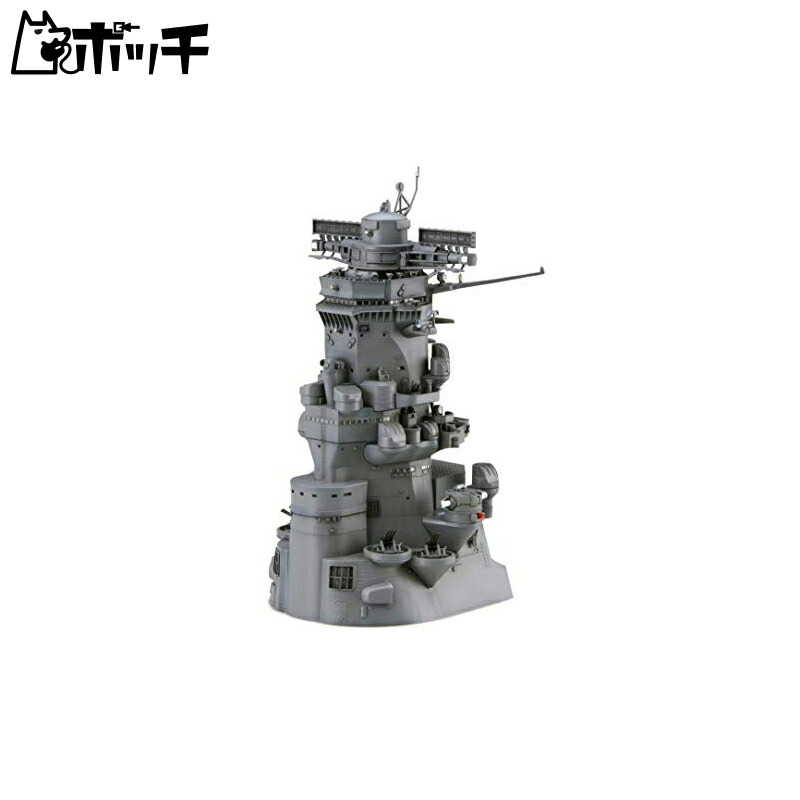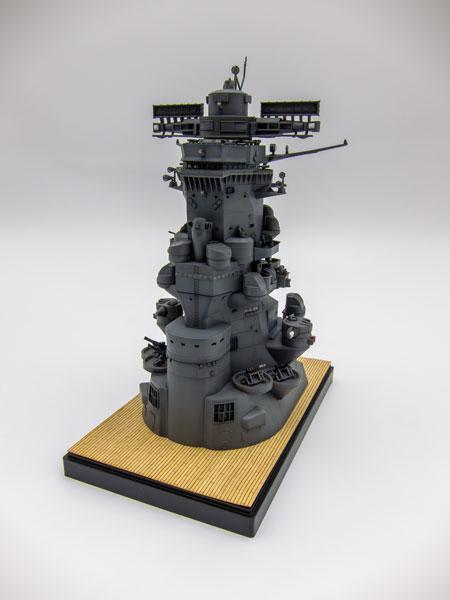
1/200 Collectible Equipment Series No.2 EX-4 1/200 Battleship Yamato Bridge (Includes genuine etching parts/wooden deck stickers for base) Plastic Model Kit
JAN
4968728020495
ASIN
B0DMZPYFXW
Maker
Model No.
020495
Color
Size
Description
Collecting Equipment Series-EX-4-Genuine Etching Parts-Plastic Model with Wood Deck Seal for Pedestal
The "Battleship Yamato Style" bridge comes with photo-etched parts and wooden deck stickers for the pedestal. Each part is colored with molded colors, so you can easily color-color-code the parts according to your image just by assembling. Designed for easy assembly. The battleship Yamato class, which boasted one of the world's largest guns, was produced as the 16th and 17th destroyers following the first ship "Yamada" and the second ship "Musashi", and was the culmination of the construction techniques used up to that time. The appearance of the bridge was modified prior to the ship's construction, and its extended shape with compactly compressed drainage volume sets it apart from conventional Japanese battleships. Surrounded by strong armor, the command section, with elevators inside and a 15-meter survey rate on top, gives it a uniform appearance. No painting required to reproduce the color scheme. Snap-fit assembly allows for assembly without glue. This is a 1/200 scale, large model with an overall height of approximately 18 cm when completed. The gray color is called the warship color, and the gray-colored plastic is used to imitate the Kure Navy Goryokaku. The product is based on the image of the final form of the first Yamata type ship Yamato. Equipped with No. 21 and No. 22 electric searchlights on the top of the bridge The overhead area has been enlarged, and the rear of the ship is equipped with a waiting area for soldiers. The signal flag deck has been extended and the number of firearms increased. Surveying globe / air defense control fukin The Yamato at that time was likewise equipped with a command center as revealed by the Musashi seabed survey. It has a light-up window slightly above the command center and an entrance hatch on the side. The unique curved outline is reproduced from the left figure. The front edge of the air defense command center is reproduced from the Musashi submarine survey. Bonus parts that need to be glued are included. The center of the cover has a window (no dimples) that serves as a compass and an anti-chip reflection of the binocular telescope; the lens portion of the 15-meter adjustable globe is reproduced with white molded parts; the 2 kg signal light pole is accurately divided into tripods; the azimuth antenna pole was originally designed for the Musashi submarine survey; the azimuth antenna pole was originally designed for the Musashi submarine survey. (The azimuth-measuring antenna column originally rose from the vertical plane of the observation chamber, but was raised from the horizontal plane due to mold constraints.) The pillar tower wall supporting the regulating sphere is reproduced with additional ribs reinforced from the lessons learned from the Musashi Totem Tight. Reproduction of the hatch on the left plate. Small binoculars behind the air defense command center is included as a bonus part. Reproduce the shape of the socket type. The hatch in the floor behind the air defense command center is represented by a convex mold from the left drawing. The first bridge hood The exterior and interior structure of the first bridge, which can be hidden when assembled. The bridge windows are made of transparent parts to reproduce realistic glass products. The inside of the bridge is surveyed based on the left drawing. The floor is raised and the ceiling surface is composed of bare steel plates. A directional magnet is placed in the center, and a scratching pattern is sculpted on the floor surface. Indexable binocular telescopes are represented as floor-suspended and ceiling-suspended types, with the 18 cm aperture binocular telescope installed in the upper view area. The appearance of the first bridge fuselage is reproduced as close as possible to the mold. The side of the first bridge reproduces the modified upper glorious shape, five side windows, and the partition door inside. The window shape at the rear of the first bridge represents the chamfered corners (top only) and the difference in level between the middle and outer sections. The signal station is angled based on the left diagram, reproducing the fenders in the middle and the step in the upper reverse corner. The 60cm signal lights installed at the signal stations (left and right) are reproduced with clear lens surfaces; the floor surface around the 60cm signal lights is reproduced with 4 chamfered parts sculpted; the No. 22 electric probe is partially reproduced in the figure shape of the one installed on the Choten bridge, with one side cover extended; and the No. 22 signal lights are partially reproduced in the figure of the one installed on the Choten bridge, with one side cover extended. 1st~2nd Canbridge Dish Towel 1.5m adjustable spherical dish towel both sides of the structure is reproduced better than the left figure; 0.5-inch (13mm) continuous cannon blue work is machined, lip is reduced to ensure a clear field of fire; 0.5-inch (13mm) continuous air cannon rear fender window (Navy General Officer Commanding) The R face consists of a flat bond of the second gun command post and a minimalist configuration. The front of the 2nd Fleet has a ladder slightly shifted to the left. There is a gap of at least 10cm between the signal post and the 3/4 detector control mechanism, which is reproduced in the model. The base where the #1/2 detector control was replaced by the machine gun firing system is also reproduced in the product as an extended area. The shape of the second midway from the lower part of the second bridge on the way to the command post and the R shape of the corner are also accurately reproduced in 3D. The aft surface reproduces the shape consisting of a gently transitioning surface from the operation room (under the first bridge) to the signal post and top. The blue wood of the lower field is sculpted as it was at the time of the workshop, with a lip only at the front, which would have been provided to protect from the wind. The rear staircase and hatches are different from those of Musashi. Command post - bridge base fukin The back of the signal surface is faithfully reproduced in 3D based on the plane of the signal station that still remains. The extended signal staircase has the stairs pulled to the left. The outpost is then reproduced with a mailbox on the front of the blue picture and a more bulky step staircase. The view window of the command tower is thickly armored
The "Battleship Yamato Style" bridge comes with photo-etched parts and wooden deck stickers for the pedestal. Each part is colored with molded colors, so you can easily color-color-code the parts according to your image just by assembling. Designed for easy assembly. The battleship Yamato class, which boasted one of the world's largest guns, was produced as the 16th and 17th destroyers following the first ship "Yamada" and the second ship "Musashi", and was the culmination of the construction techniques used up to that time. The appearance of the bridge was modified prior to the ship's construction, and its extended shape with compactly compressed drainage volume sets it apart from conventional Japanese battleships. Surrounded by strong armor, the command section, with elevators inside and a 15-meter survey rate on top, gives it a uniform appearance. No painting required to reproduce the color scheme. Snap-fit assembly allows for assembly without glue. This is a 1/200 scale, large model with an overall height of approximately 18 cm when completed. The gray color is called the warship color, and the gray-colored plastic is used to imitate the Kure Navy Goryokaku. The product is based on the image of the final form of the first Yamata type ship Yamato. Equipped with No. 21 and No. 22 electric searchlights on the top of the bridge The overhead area has been enlarged, and the rear of the ship is equipped with a waiting area for soldiers. The signal flag deck has been extended and the number of firearms increased. Surveying globe / air defense control fukin The Yamato at that time was likewise equipped with a command center as revealed by the Musashi seabed survey. It has a light-up window slightly above the command center and an entrance hatch on the side. The unique curved outline is reproduced from the left figure. The front edge of the air defense command center is reproduced from the Musashi submarine survey. Bonus parts that need to be glued are included. The center of the cover has a window (no dimples) that serves as a compass and an anti-chip reflection of the binocular telescope; the lens portion of the 15-meter adjustable globe is reproduced with white molded parts; the 2 kg signal light pole is accurately divided into tripods; the azimuth antenna pole was originally designed for the Musashi submarine survey; the azimuth antenna pole was originally designed for the Musashi submarine survey. (The azimuth-measuring antenna column originally rose from the vertical plane of the observation chamber, but was raised from the horizontal plane due to mold constraints.) The pillar tower wall supporting the regulating sphere is reproduced with additional ribs reinforced from the lessons learned from the Musashi Totem Tight. Reproduction of the hatch on the left plate. Small binoculars behind the air defense command center is included as a bonus part. Reproduce the shape of the socket type. The hatch in the floor behind the air defense command center is represented by a convex mold from the left drawing. The first bridge hood The exterior and interior structure of the first bridge, which can be hidden when assembled. The bridge windows are made of transparent parts to reproduce realistic glass products. The inside of the bridge is surveyed based on the left drawing. The floor is raised and the ceiling surface is composed of bare steel plates. A directional magnet is placed in the center, and a scratching pattern is sculpted on the floor surface. Indexable binocular telescopes are represented as floor-suspended and ceiling-suspended types, with the 18 cm aperture binocular telescope installed in the upper view area. The appearance of the first bridge fuselage is reproduced as close as possible to the mold. The side of the first bridge reproduces the modified upper glorious shape, five side windows, and the partition door inside. The window shape at the rear of the first bridge represents the chamfered corners (top only) and the difference in level between the middle and outer sections. The signal station is angled based on the left diagram, reproducing the fenders in the middle and the step in the upper reverse corner. The 60cm signal lights installed at the signal stations (left and right) are reproduced with clear lens surfaces; the floor surface around the 60cm signal lights is reproduced with 4 chamfered parts sculpted; the No. 22 electric probe is partially reproduced in the figure shape of the one installed on the Choten bridge, with one side cover extended; and the No. 22 signal lights are partially reproduced in the figure of the one installed on the Choten bridge, with one side cover extended. 1st~2nd Canbridge Dish Towel 1.5m adjustable spherical dish towel both sides of the structure is reproduced better than the left figure; 0.5-inch (13mm) continuous cannon blue work is machined, lip is reduced to ensure a clear field of fire; 0.5-inch (13mm) continuous air cannon rear fender window (Navy General Officer Commanding) The R face consists of a flat bond of the second gun command post and a minimalist configuration. The front of the 2nd Fleet has a ladder slightly shifted to the left. There is a gap of at least 10cm between the signal post and the 3/4 detector control mechanism, which is reproduced in the model. The base where the #1/2 detector control was replaced by the machine gun firing system is also reproduced in the product as an extended area. The shape of the second midway from the lower part of the second bridge on the way to the command post and the R shape of the corner are also accurately reproduced in 3D. The aft surface reproduces the shape consisting of a gently transitioning surface from the operation room (under the first bridge) to the signal post and top. The blue wood of the lower field is sculpted as it was at the time of the workshop, with a lip only at the front, which would have been provided to protect from the wind. The rear staircase and hatches are different from those of Musashi. Command post - bridge base fukin The back of the signal surface is faithfully reproduced in 3D based on the plane of the signal station that still remains. The extended signal staircase has the stairs pulled to the left. The outpost is then reproduced with a mailbox on the front of the blue picture and a more bulky step staircase. The view window of the command tower is thickly armored
Package
Size (Approx.):
Size (Approx.):
210x78x355 mm
Package
Weight (Approx.):
Weight (Approx.):
450 g
6,600 JPY (Including Tax)
Stock :
1
Scheduled Shipping:
2026-07-09
Quantity :
Reference Price from Other Stores